Advanced OEM and Custom Auto Parts for Global Procurement
Expert insights on the shifting paradigms of mechanical load dynamics, materials, and heavy-duty drivetrain customization
The global industrial sector is undergoing a massive shift towards automation, heavy-load capacities, and optimized energy efficiency. At the heart of this physical transition is the axle—a core mechanical component responsible for carrying structural loads and transmitting torque under diverse and rigorous operational parameters. Historically, standardized off-the-shelf axle assemblies were sufficient for light machinery and standard automotive fleets. However, today's complex applications demands are highly specific. From custom-profile heavy-duty logistics trailers to high-precision electric drivetrains, the requirement for a specialized Custom Axles Supplier & Exporter has become paramount.
Modern custom axle engineering utilizes advanced metallurgy, structural topology optimization, and precision surface treatments. Manufacturers are shifting away from basic carbon steel shafts toward complex micro-alloyed steels, including AISI 4140, AISI 4340, and custom-forged configurations. These materials undergo sophisticated processes such as induction hardening, carburizing, and nitriding, allowing them to endure cyclic stresses, heavy torsional impact, and corrosive environments. As standard configurations fail to meet specific dimensional and mechanical load thresholds, custom axle engineering bridges the gap by optimizing spline profiles, bearing seats, and flange designs.
Utilizing high-tensile alloys (4140, 4340, 8620) engineered to maximize yield strength and torsional resistance under extreme cyclic loading.
Involves customized spline formations to maximize tooth contact and minimize stress concentrations under rapid acceleration cycles.
Utilizing comprehensive Finite Element Analysis (FEA) to simulate dynamic loading, ensuring long service life and zero mechanical failures.
Global procurement teams face multifaceted challenges when sourcing critical mechanical drive structures. The procurement process for high-reliability drivetrain modules and custom axle shafts must look beyond basic unit cost parameters. Today’s industrial managers demand low Total Cost of Ownership (TCO), strict adherence to international quality standards, and high supply chain reliability. For industries operating in harsh fields like mining, off-highway construction, heavy agricultural operations, or specialized e-mobility, sourcing custom-designed axles requires highly transparent engineering documentation, chemical composition analysis, and precise material tractability.
Furthermore, the procurement matrix is closely tied to Just-in-Time (JIT) delivery dynamics and global shipping compliance. A delays in critical axle deliveries can halt production lines, leading to immense economic losses. As a result, procurement officers are prioritizing partners that demonstrate not only technical manufacturing capabilities but also robust logistic risk mitigation structures. This includes end-to-end quality assurance, dual-source raw material strategies, and structured quality gates at every production stage.
Addressing complex industrial drivetrain requirements requires custom axle suppliers to provide macro-level engineering solutions. A system-oriented approach is critical: instead of treating the axle shaft as an isolated component, it is evaluated as a dynamic part of the entire powertrain. This involves close engineering collaboration to assess input torque, transmission gear ratios, radial wheel loads, and suspension geometry. By designing the hub, braking interface, bearings, and shaft as a unified assembly, engineers can eliminate potential stress interfaces.
For example, in transit vehicles or electric trucks, the design must handle high starting torque and regeneration braking cycles. Traditional axle shafts might experience early fatigue due to these reverse torsional stress cycles. To prevent this, custom axle solutions feature custom-engineered root radii on splines, specialized shot-peening to introduce compressive residual stresses, and customized center-less grinding paths to eliminate surface micro-cracks. Through these macro-level approaches, suppliers provide structural reliability that off-the-shelf components simply cannot achieve.
A global industrial supply chain is only as strong as its local support and regulatory compliance. Heavy industrial components are subject to strict standards across different regional markets. When importing machinery assemblies to North America, compliance with SAE and DOT standards is mandatory. In Europe, conformity with DIN, ISO, and CE regulations dictates market access. A professional custom axle exporter must ensure that all products comply with these regional variations.
Moreover, localization support means offering real-time technical consulting, localized warehousing strategies, and responsive engineering support. When field issues arise, having a supplier that can quickly analyze failure mechanisms, dispatch engineering teams, or provide rapid prototype replacements is invaluable. Combining Chinese manufacturing efficiency with global compliance standards allows modern manufacturers to deliver high-quality, cost-effective industrial components to markets worldwide.
Full manufacturing alignment with DOT, ISO 9001:2015, IATF 16949, SAE, and DIN technical guidelines, ensuring smooth market entry across Europe and the Americas.
Heavy-duty, ocean-freight proof packaging using customized VCI (Volatile Corrosion Inhibitor) bags, rust-preventive oils, and custom structural crating.
Real-time engineering consultation, localized 3D model validation, detailed load simulation reports, and immediate response for design adjustments.
The next decade presents challenges and opportunities for axle design. As heavy machinery and commercial vehicles transition toward electrification and autonomous operations, the demands placed on the axle assembly are changing. Future product roadmaps focus heavily on weight reduction without compromising load capacity. By integrating carbon fiber composite tube designs with high-strength alloy steel ends, weight can be reduced by up to 35%, boosting the range and efficiency of electric drive configurations.
Another major innovation is the development of "smart axles" embedded with telemetry sensors. These sensors monitor load dynamics, vibration profiles, temperature trends, and fatigue strain in real time. This allows fleet operators to shift from reactive maintenance to predictive health monitoring, preventing costly structural failures. Additionally, manufacturers are adopting environmentally friendly production methods, such as eco-friendly heat treatments and recycled alloy sourcing, reducing the overall carbon footprint of custom-manufactured components.
Learn more about our production facilities, corporate values, and global supply networks
Taizhou OLO Auto Parts Co., Ltd. was established in 2003. It is located in Taizhou, China. Taizhou is the industry weathervane in the auto parts industry at home and abroad, which has great influence. Our company mainly deals in Korean (Hyundai, Kia) automotive accessories, combining traditional and professional network wholesale and retail. With the company's "integrity, win-win, professional, sharing" business philosophy, after more than ten years of development, the company has a certain size and strength.
Now we have a professional team and good reputation in the industry, and we established a perfect sales network throughout the country and the world with a large number of long-term cooperation of high-quality partners. With the market and customer needs, the company has established its own brand--OLO, which has received supports and praises from a large number of customers at home and abroad. We also have many agents and distributors.
To continuously strengthen cooperation with customers and share business relationships, the company constantly strives to innovate and keep up with the times, continuing to focus on the auto parts market. In order to be a "good auto parts person", we are willing to bring more high-quality products and services for more customers, work together to create a bright future. Your satisfaction is always our aim.
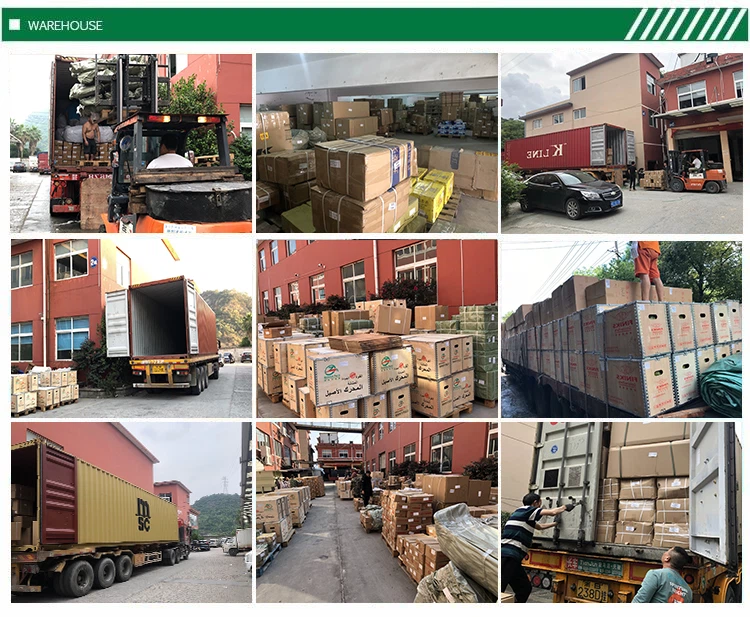
Sincerely look forward to your cooperation
Get answers to common technical, manufacturing, and logistic questions regarding custom axle development
We primarily utilize high-tensile carbon steels and alloy steels such as AISI 1045, 4140, and 4340. The material is selected based on your operational requirements, including expected torsional stress, radial load capacity, and environment (e.g., exposure to corrosive elements).
We use advanced 3D modeling and Finite Element Analysis (FEA) to simulate real-world stress, torsional limits, and bending moments. This process ensures the design minimizes stress concentrations and maintains a high safety margin prior to physical prototype testing.
We provide a range of heat treatments, including induction hardening for surface wear resistance, through-hardening for deep core strength, nitriding for corrosion and fatigue resistance, and stress relieving to ensure dimensional stability during machining.
MOQ varies depending on the axle's complexity and raw material requirements. We support small batch prototyping and initial production runs for validation. Please contact our engineering sales department with your specifications for a custom quote.
Our splines are produced using precision CNC gear hobbing or cold forming machines. We maintain tolerances according to international standards (e.g., DIN 5480, ANSI B92.1) and verify spline profiles with specialized optical comparators and coordinate measuring machines (CMM).
All exported axles undergo a rigorous rust-prevention process. They are coated with industrial rust-inhibitive oil, wrapped in VCI (Volatile Corrosion Inhibitor) packaging, and secured in custom wooden crates to prevent moisture exposure and physical damage during transit.
Premium solutions across auto components, electronic modules, and customized manufacturing services
 OLO Auto Parts